
SPAIN wins FIFA World Cup 2026, beat Argentina 1-0 with goal in extra time
.gif)

Download Mobile App 






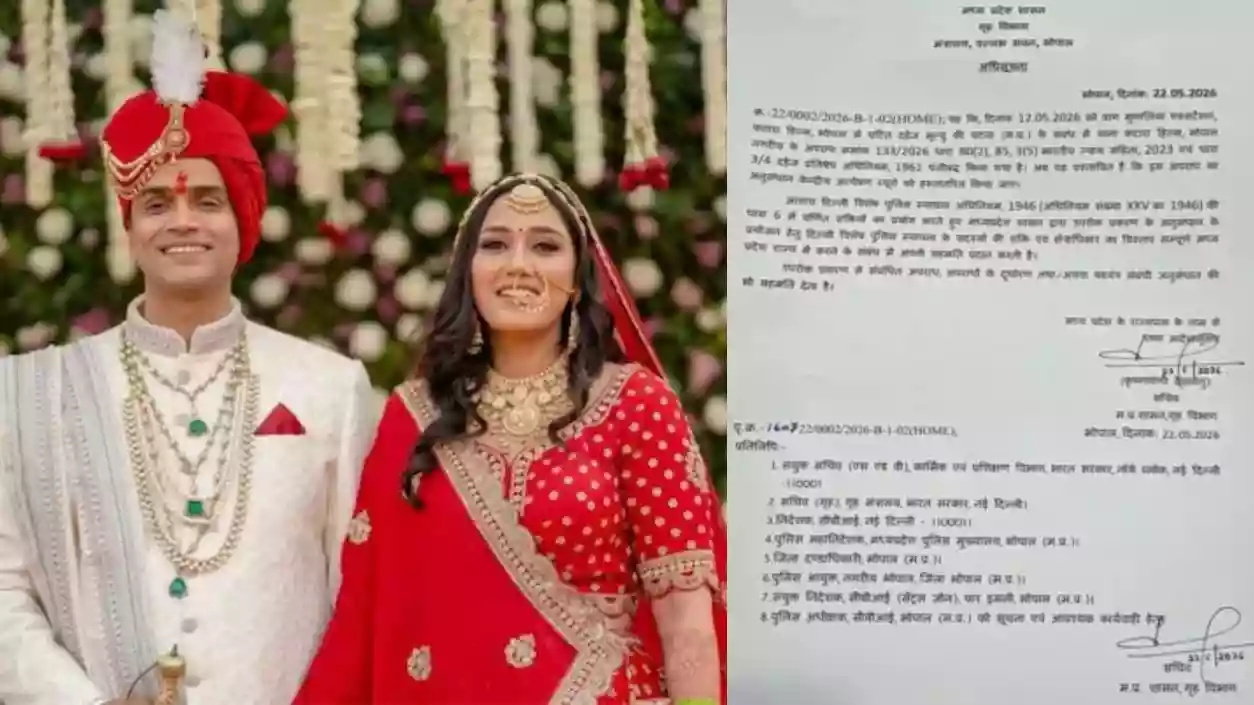
The Madhya Pradesh government on Friday recommended a CBI investigation into the death of Twisha Sharma, who was found hanging at her matrimonial home in Bhopal on May 12. Through an official notification issued by the Home Department, the state government granted consent under Section 6 of the Delhi Special Police Establishment Act, 1946, allowing the Central Bureau of Investigation to exercise jurisdiction across the state for the specific case.
The notification, signed by Home Department Secretary Krishnaveni Deshavatu, was forwarded to multiple central and state authorities to facilitate the transfer of the investigation. Copies were sent to the Department of Personnel and Training, the Union Home Secretary, the CBI Director, the Madhya Pradesh Director General of Police, the Bhopal District Magistrate, the Bhopal Police Commissioner and regional CBI offices for further action related to the probe.
Twisha Sharma, a 33-year-old model-turned-actor, was found dead at her marital residence in the Katara Hills area of Bhopal. Her family alleged that she was subjected to dowry harassment and accused her in-laws of driving her to death. Her in-laws, however, claimed that she was addicted to drugs. Police registered an FIR under Sections 80(2), 85 and 3(5) of the Bharatiya Nyaya Sanhita along with relevant provisions of the Dowry Prohibition Act against her husband Samarth Singh and Giribala Singh.
Police later announced a cash reward of Rs 30,000 for information leading to the arrest of Samarth Singh and also moved court seeking cancellation of his passport. Meanwhile, Twisha Sharma’s family raised concerns regarding alleged phone calls made by accused Giribala Singh to several influential individuals immediately after the death. The family stated that details of the alleged communications emerged through documents submitted before the court and media reports.
According to a statement issued by Twisha Sharma’s father Navnidhi Sharma, the alleged contacts included judges, doctors, advocates, police officers and individuals associated with CCTV maintenance systems. The family said it was not drawing any conclusions regarding the purpose of the calls but requested an independent examination of the timing and context of the communications. The statement also stressed the importance of preserving CCTV footage and electronic evidence as part of the investigation into the death.



.webp)

 West Bengal
 Bihar
Bihar Uttar Pradesh
 Jharkhand